





By Maggie Mahar
healthinsurance.org contributor
Note to readers: I welcome questions and comments, and will try my best to reply in a timely manner. I ask only that you do your part to keep our discussion reasoned and polite. – MM

On his Health Policy Blog John Goodman asks “Could Wasteful Health Care Spending Be Good for the Economy?” and proceeds to gives two examples of what he perceives as waste: preventive care without co-pays and wellness exams for seniors – both covered under the ACA.
He’s right: We have no clear evidence that a comprehensive annual physical provides any benefit for an asymptomatic adult. But apparently Goodman doesn’t know that the “annual wellness visit is not the same thing as an annual physical exam.”
The wellness visit includes no pricey tests. The doctor checks “height, weight, blood pressure, takes a medical history, and records what medications the patients is taking and what other doctors he is seeing.”
As for providing care with low or no co-pays, Brad Wright suggests it is essential – especially for the poor. On Wright on Health, he describes a new rule, proposed by the Department of Health and Human Services that could prove “disastrous” for patients on Medicaid.
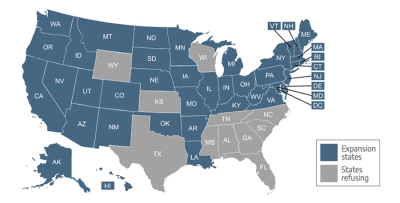
“HHS is now attempting to woo states into participating in the Medicaid expansion by allowing them to increase cost-sharing in Medicaid” for all but the poorest of the poor.
Wright cites research showing that when people have to spend out-of-pocket, they are less likely to seek needed medical help. This is particularly true of the poor: even a $20 co-pay may mean choosing between food and seeing a doctor. Thus, “Medicaid has historically limited the amount of cost-sharing that states can impose on beneficiaries.” Now this could change.
Note: This is a proposed rule. The Centers for Medicare and Medicaid will be accepting comments until Feb. 13.
Reining in spending doesn’t mean that patients must suffer. As I write in a post here on healthinsurance.org, we can trim much of the fat without hurting patients. Recently, I interviewed Center For American Progress’ (CAP) President Neera Tanden about CAP’s proposals for cutting $385 billion from Medicare spending without drawing blood. Care would not be rationed, and costs would not be shifted to seniors.
President Obama has said he’s open to “modest adjustments” to Medicare. Bloomberg News recently described CAP as “the intellectual wellspring for Democratic policy proposals. CAP”s proposals may offer a preview of adjustments that the president would consider
“With the flu season upon us, the media’s in a frenzy. Unfortunately the sensationalism isn’t limited to the illness itself; the enthusiasm for Tamiflu, the equivalent of the mining-after pill for flu sufferers, is similarly hyped.” But Paduda reports, “Turns out Tamiflu actually only shortens duration by a day or so, and while it can moderate the worst of the symptoms,” it’s no cure. He offers links to “the Cochrane Collaboration, perhaps the world’s leading analysts of medical research.”
Just how many readmissions are preventable? he asks, noting that while “we readmit 20 percent of Medicare beneficiaries 30-days post discharge . . . the majority return within 2-weeks with a different chief complaint.”Flansbaum cross-posts a thoughtful piece by the Incidental Economist’s Austin Frakt which emphasizes that “variation in socioeconomic status and hospital resources play large roles in variation in readmission rates.” The hospitals that are penalized “may be those that can least afford it.
“It’s unclear” that Medicare’s current program “is targeting the right thing and measuring it in the right way.” More research is needed.
Under Obamacare, “employers are facing up to the fact” that they “will be responsible for providing health care coverage for their staffers.” Williams observes. “That’s a good thing because it means some will focus harder on innovative ways to get more value for money.”In Cincinnati several employers have signed up for TrueCost, a simple plan that pays providers 140 percent of Medicare rates. The idea is to save the trouble and cost of negotiating with providers.
“But hospitals are angry about the plan.” Williams quotes Catholic Health Partners’ Jennifer Atkins: “Every hospital sets their own prices.” (My translation: “we reserve the right to demand as much as we can get. ” Pricing is all about market clout.)
Williams goes on to examine whether Medicare’s payments really are insufficient to cover hospital costs.
Meador estimates that 30 percent of chronic illnesses are “psychosomatic.” He stresses that this does not mean “it’s all in your head.” The symptoms are real. Typically, they’re caused by stress at work or at home. By asking questions, and listening, a good PCP can help the patient locate the cause. But too often, patients are fed directly into the specialist system, where specialists are trained to trace symptoms to their particular organ. To a hammer, everything looks like nail.
After being pursued by a “tough as nails, relentless federal prosecutor,” Swartz committed suicide. Yet Poses notes, this same U.S. Attorney has been “soft as a marshmallow when dealing with top executives of health care corporations. True health care reform is impossible” Poses warns, “without accountability for the leaders of health care organizations.”
Writing on Insure.org, Bob Vineyard spots danger, not in the private sector, but in government. He quotes Japan’s finance minister suggesting that Japan spends too much on end-of-life care: “Japan’s seniors should ‘Hurry Up and Die.’”
Vineyard suggests that as Washington takes over healthcare, the U.S. may adopt a similar attitude. (Given that, 21 percent of today’s voters are over 65, 19% are 55-64, and their political clout is growing, I don’t see this happening anytime soon.)
“The services we’ve been providing to our Colorado clients for the last decade” are similar, Norris acknowledges. . But in the Exchanges shoppers will be eligible for subsidies that should “entice millions of currently uninsured middle-income Americans onto the health insurance roster.”Colorado has a robust insurance market, and has been in the vanguard of reform. Thus, the introduction of Exchanges “might not be as significant as they will be in other states,” she writes,, but “we’re all in this together as a country rather than as a bunch of isolated states.”
But “Health and human services has taken $15 billion of cuts … and California families and our economy need help now,” says Wright. “Small strategic investments and restorations could yield major improvements in our health system, and could bring in additional federal matching funds … Fiscal prudence also means taking advantage of funding opportunities, and not leaving dollars in DC.
Maggie Mahar is a financial journalist who has written extensively about the American health care system. Her book, Money-Driven Medicine: The Real Reason Health Care Costs So Much, was the inspiration for the documentary, Money Driven Medicine. She is a prolific blogger, and recently relaunched her HealthBeat Blog. Previous articles for the Health Insurance Resource Center include The future of YOUR health insurance premiums and Will health insurance premiums skyrocket in 2014? She also provides background on Congressional health care legislation for HealthReformVotes.org, a special project of the Health Insurance Resource Center.
Tags: health policy, health reform, Health Wonk Review, Maggie Mahar, Medicaid
Posted January 31, 2013
Editor's Note: Opinions expressed on these pages are those of the individual author(s) and do not necessarily reflect the views of the management or ownership of healthinsurance.org.