advance premium tax credit
What is an advance premium tax credit?
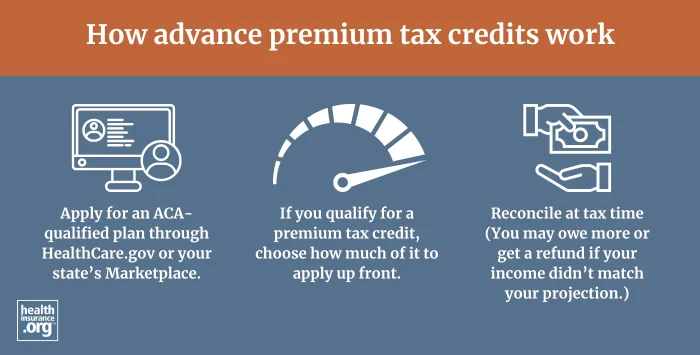
An advance premium tax credit, often just called APTC, refers to an Affordable Care Act (ACA) Marketplace premium tax credit (premium subsidy) that's paid throughout the year, directly to the insurer on behalf of an enrollee. This means it's paid in advance, as opposed to the person having to wait and claim it on their tax return the following spring the way most other tax credits work.
Most people who enroll in health coverage through the exchange/Marketplace are eligible for income-based premium tax credits. And the vast majority of those enrollees choose to receive their premium tax credits in advance, rather than waiting until they file their tax return and claiming it all at that point.
Of the 23.1 million people who selected plans during the open enrollment period for 2026 coverage, 87% were receiving APTC.1 This was down from 92% the year before,2 due to the expiration of federal subsidy enhancements at the end of 2025. But even after the subsidy enhancements expired, most enrollees do still qualify for premium subsidies.
When APTC is paid to an insurer on behalf of an exchange/Marketplace enrollee, the enrollee must reconcile that when they file their tax return. Their actual premium tax credit is based on the amount that they earned during the year, whereas their advance premium tax credit was based on a projection of what they thought they would earn. If those amounts end up being different, the person might have to repay some or all of the APTC that was paid on their behalf, or they might end up receiving an additional amount of premium tax credit from the IRS.
Starting with the 2026 plan year (tax returns filed in early 2027), there is no longer any cap on how much excess APTC must be repaid to the IRS. So if a person's APTC ends up being more than they were eligible for once their actual income is known, all of the excess will have to be repaid.
Footnotes
- "2026 Marketplace Open Enrollment Period Public Use Files" Centers for Medicare & Medicaid Services. Accessed July 11, 2026 ⤶
- "2025 Marketplace Open Enrollment Period Public Use Files" Centers for Medicare & Medicaid Services. Accessed July 11, 2026 ⤶