Are DACA recipients eligible for Marketplace insurance, subsidies, or other health benefits?

In this article
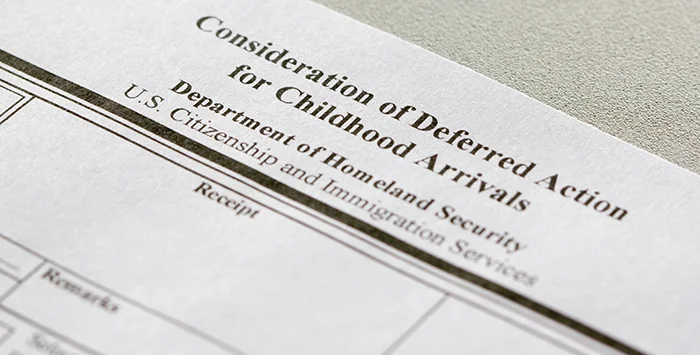
DACA (Deferred Action for Childhood Arrivals) recipients are not currently eligible to enroll in health coverage through the Affordable Care Act’s Marketplaces or receive federal Marketplace subsidies. But depending on their circumstances and where they live, DACA recipients may have access to other health coverage and benefits, including employer-sponsored insurance and some state-funded health programs.
Here’s what DACA recipients should know about their health coverage options and how eligibility rules have changed in recent years.
Can DACA recipients enroll in Marketplace coverage?
No, DACA recipients cannot enroll in Marketplace coverage. Under a new federal rule, DACA (Deferred Action for Childhood Arrivals) recipients became ineligible to enroll in Affordable Care Act Marketplace coverage (with or without subsidies), effective August 25, 2025. The change was expected to reduce Marketplace enrollment by approximately 10,000 people, and reduce Basic Health Program enrollment by approximately 1,000 people.1
In California alone, 2,400 DACA recipients were disenrolled from Marketplace plans at the end of August 2025.2
DACA eligibility for Marketplace and subsidies
From 2014 through October 2024, DACA recipients could not use the health insurance Marketplace. But the Biden administration adopted federal rules to allow DACA recipients to enroll in Marketplace coverage nationwide, with income-based subsidies, starting in November 2024.3
Nineteen states challenged the Biden administration rule change in court, and a federal judge blocked the rule allowing Marketplace access for DACA recipients in those 19 states.4
In the rest of the country, DACA recipients continued to have access to Marketplace plans and subsidies for the rest of 2024 and several months of 2025. But that changed in August 2025 due to another federal rule finalized by the Trump administration in June 2025.
Who are DACA recipients?
The Deferred Action for Childhood Arrivals program was created in 2012 to protect young people who had arrived in the United States as children without proper immigration paperwork.5 The program temporarily protects them from deportation and allows them to work in the U.S. but does not grant them lawful status in the U.S.6 DACA recipients must renew their DACA status every two years.7
As a result of a 2023 court order, U.S. Citizenship and Immigration Services is no longer processing initial DACA applications. But the agency is continuing to process renewal applications for people who received their DACA status before July 16, 2021.8
All DACA recipients are undocumented immigrants who came to the United States when they were children. They are commonly referred to as “Dreamers,” though most Dreamers are not enrolled in DACA. Although an estimated 3.6 million Dreamers are living in the U.S., only about 530,000 of them are DACA recipients.9
Dreamers who are not enrolled in DACA did not gain access to the health insurance Marketplaces under the 2024 federal rule change.
The term “Dreamers” comes from the DREAM Act (Development, Relief and Education for Alien Minors Act), which would have given legal status to all eligible individuals who arrived in the U.S. as children without documentation. This legislation was first introduced in Congress in 2001 and has been reintroduced numerous times since then, but has never passed.10
Can DACA recipients enroll in Basic Health Program coverage?
Under the ACA, states have the option to create a Basic Health Program (BHP), although only four have done so (New York, Minnesota, Oregon, and Washington, D.C.) A BHP provides coverage, with zero or low premiums, to people who don’t qualify for Medicaid and whose household income is up to 200% of the federal poverty level.
The 2024 federal rule change allowed DACA recipients to enroll in BHP coverage starting in November 2024,11 and the Biden administration projected that roughly 1,000 DACA recipients would qualify for BHP coverage under the new rule.12 But that was reversed in August 2025 under the Trump administration rule.
However, some of the states with Basic Health Programs are using state funds to ensure that DACA recipients can remain covered:
- Minnesota had allowed DACA recipients to enroll in BHP coverage since 2017,13 using state funds to provide the coverage.14 The 2024 federal rule change meant that from November 2024 through August 2025, Minnesota did not have to fully fund BHP coverage for DACA recipients, but it didn’t change anything about enrollees’ eligibility for coverage. And MinnesotaCare confirmed that nothing changed about DACA recipients’ access to coverage under the 2025 federal rule change. DACA recipients did not lose MinnesotaCare coverage,15 and can still enroll in MinnesotaCare if they meet the eligibility requirements.16
- New York DACA recipients lost their BHP (Essential Plan) coverage at the end of June 2026, but New York transitioned them to state-funded Medicaid instead.17 (The later date in New York was because the Essential Plan wasn’t technically a BHP from the spring of 2024 until mid-2026.)
- Oregon disenrolled DACA recipients from the state’s BHP as of October 1, 2025.18
- Washington, DC does not allow DACA recipients to enroll in its BHP, but they can get coverage through the DC Healthcare Alliance if they meet certain eligibility requirements.19
Can DACA recipients enroll in Medicaid?
DACA recipients can only enroll in Medicaid if a state opts to allow this and uses only state funds to provide the coverage, and a few states do.20 State Medicaid programs are typically funded with a combination of state and federal funds, but federal funds cannot be used to provide Medicaid to DACA recipients (or to any undocumented immigrants).
Can undocumented immigrants get health insurance?
Federal funding cannot be used to provide health insurance for undocumented immigrants. And undocumented immigrants cannot enroll in coverage through the Marketplace unless a state has obtained federal permission to allow this. A few states have taken steps to allow undocumented immigrants to enroll in Marketplace (or similar) plans.
Undocumented immigrants can obtain health coverage outside the Marketplace, either from an employer or directly purchased from an insurance company. And in some states, they can be eligible for state-funded Medicaid or similar coverage. But about half of all undocumented immigrants in the U.S. are uninsured.21
Footnotes
- “Patient Protection and Affordable Care Act; Marketplace Integrity and Affordability” Federal Register, U.S. Department of Health & Human Services. June 25, 2025 ⤶
- “Covered California Board Meeting Minutes” Covered California. July 28, 2025 ⤶
- “Biden-Harris Administration Finalizes Policies to Increase Access to Health Coverage for DACA Recipients” U.S. Department of Health & Human Services. May 3, 2024 ⤶
- “State of Kansas et al. (plaintiffs) vs. United States of America et al (defendants)” United States District Court for the District of North Dakota. Ruling issued Dec. 9, 2024 ⤶
- “Ten years of DACA” The Obama Foundation. Accessed Sep. 3, 2025 ⤶
- “Consideration of Deferred Action for Childhood Arrivals (DACA)” U.S. Citizenship and Immigration Services. Accessed Sep. 24, 2026 ⤶
- “Consideration of Deferred Action for Childhood Arrivals (DACA) – Renewal of DACA” (Frequently Asked Questions) U.S. Citizenship and Immigration Services. Accessed Sep. 24, 2026 ⤶
- “Consideration of Deferred Action for Childhood Arrivals (DACA) – Alert: Court Decisions Regarding DACA” U.S. Citizenship and Immigration Services. Accessed Sep. 24, 2026 ⤶
- “Fact Sheet: Deferred Action for Childhood Arrivals (DACA)” National Immigration Forum. May 21, 2024 ⤶
- “The Dream Act: An Overview” American Immigration Council. May 8, 2024 ⤶
- “HHS Final Rule Clarifying the Eligibility of Deferred Action for Childhood Arrivals (DACA) Recipients and Certain Other Noncitizens” CMS.gov Newsroom. May 3, 2024 ⤶
- Relevant paragraph of “Clarifying the Eligibility of Deferred Action for Childhood Arrivals (DACA) Recipients and Certain Other Noncitizens for a Qualified Health Plan through an Exchange, Advance Payments of the Premium Tax Credit, Cost-Sharing Reductions, and a Basic Health Program” Centers for Medicare & Medicaid Services; Federal Register. May 8, 2024 ⤶
- “MinnesotaCare eligibility for DACA grantees” Minnesota Department of Human Services. Accessed Aug. 10, 2024 ⤶
- “A Comparison of States’ Use of 1331 Waivers to Create a Basic Health Plan” United States of Care. June 23, 2023 ⤶
- Phone conversation with MinnesotaCare representative, July 31, 2025, and “DHS Announces MinnesotaCare Eligibility Changes for Certain Undocumented Individuals” Minnesota DHS. June 17, 2025 ⤶
- “People who are DACA grantees” Minnesota Department of Human Services. Accessed Sep. 24, 2026 ⤶
- “Information for Essential Plan Enrollees about Changes due to Federal Rules” New York State of Health. Apr. 1, 2026 ⤶
- "Monitoring Federal Changes and any Impacts on Oregon" (Section titled “Oregon Health Insurance Marketplace”) Oregon Health Authority. Accessed Sep. 24, 2026 ⤶
- “Are there health insurance options for residents who are not eligible for most programs due to immigration status?” DC Health Link. Accessed Sep. 24, 2026 ⤶
- “Access to Health Insurance for DACA Recipients with Disabilities” National Center for Children in Poverty. July 6, 2021 ⤶
- “Key Facts on Health Coverage of Immigrants” KFF.org. May 16, 2026 ⤶